EMF research
Shield Your Body Phone Case Review: RF Shielding Test Plan
A Shield Your Body phone case review page focused on RF shielding orientation, baseline readings, and the evidence needed before a product verdict.
Review focus
What an RF phone-case test must control
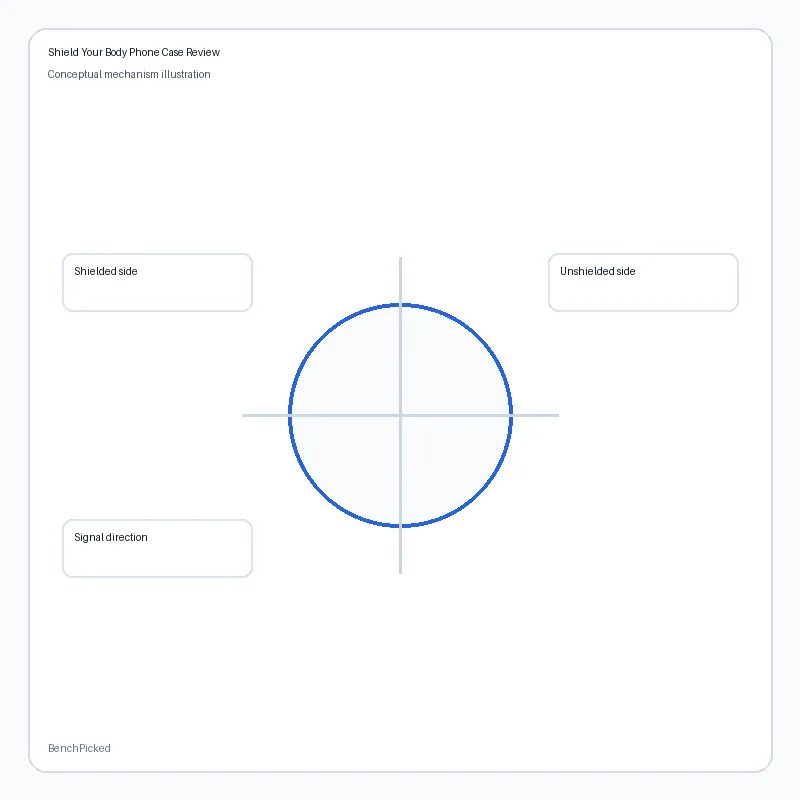
A phone-case shielding test must compare no-case, shielded-side, and unshielded-side readings at the same distance and orientation while noting signal behavior. Otherwise the result can be driven by setup noise rather than the case.
What this guide covers
Evaluate one EMF product with source notes, orientation requirements, physical mechanism, and health-claim boundaries.
What makes this page useful
A phone-case test plan that separates shielded-side attenuation, unshielded-side behavior, signal conditions, and health-claim boundaries.
Source and specification basis
This page uses source-attributed product specifications and physical claim boundaries. Hands-on conclusions appear only on pages labeled as tested by BenchPicked.
- Manufacturer or manual specification source
- Field type and frequency range details
- Seller or affiliate source checked near publication
- Source boundary statement
Visual guide
Common questions
How does a shielding phone case work?
A shielding phone case uses conductive material on a defined side or panel. The test question is whether readings change when that side is oriented toward the meter under controlled conditions.
Does a shielding case reduce signal strength?
It can, depending on orientation and the path between the phone and the network. That is why BenchPicked records signal condition and tests more than one orientation.
Can I measure a shielding phone case at home?
Yes, if you keep distance, orientation, phone state, and source conditions consistent. One uncontrolled reading is not enough for a product conclusion.
Does BenchPicked decide whether EMF exposure is safe?
No. BenchPicked explains physical field concepts and product claims separately from health risk. We do not diagnose, evaluate personal risk, or make health-effect claims.